Wood vs Metal vs Upholstered Restaurant Chairs: Which Lasts? (2026)
How wood, steel and upholstered restaurant chairs compare on durability, joinery, weight, cleaning and repair, with what to check on the drawing before you buy.
Short answer
All three can last for many years in a restaurant if they are built as contract chairs. Steel is the strongest per pound and the easiest to clean and stack. Solid hardwood is warm, repairable and long-lived when the joints are mortise-and-tenon or dowelled with corner blocks. Upholstered chairs add comfort but need contract-grade covers and a removable seat. Choose by service style, then check the construction details below.
This guide compares the three on the things that actually decide a chair's life in a dining room: how the frame is joined, how the finish copes with cleaners, what it weighs, and what happens when something breaks. It is written by Chair Foundry, a line by EASEN Commercial Furniture, from the factory floor up.
What makes a chair "commercial grade"?
There is no single legal definition of a commercial restaurant chair in the US. In practice, "commercial" or "contract" means a chair designed and built for public, high-frequency use, not a home dining chair sold in bulk. The differences show up in four places:
- Joints. Glued and mechanically reinforced, not just screwed or stapled.
- Materials. Hardwood or properly sized steel tube; contract-grade fabric or vinyl; high-resilience foam.
- Finish. Coatings that resist water, alcohol and repeated cleaning.
- Serviceability. Removable seats, replaceable glides, and parts that can be retightened.
When testing is required, specifiers often refer to international strength and durability standards for non-domestic seating such as EN 16139, or to relevant ANSI/BIFMA test methods. Chair Foundry can arrange testing for a specific model on request; test reports are supplied for the specific item where available.
How do wood, metal and upholstered chairs compare?
| Factor | Solid wood | Steel | Upholstered (wood or steel frame) |
|---|---|---|---|
| Strength-to-weight | Good | Excellent | Depends on frame |
| Typical weight | 9-16 lb (4-7 kg) | 9-15 lb (4-7 kg) | 13-26 lb (6-12 kg) |
| Stackable | Rarely | Often | Some steel-frame designs |
| Cleaning | Wipe; avoid soaking joints | Wipe; tolerant of most cleaners | Depends on cover: vinyl easiest |
| What fails first | Joints loosen if poorly made | Finish chips at contact points | Seat cover wears or stains |
| Repair | Re-glue, retighten, refinish | Touch-up, re-weld, re-coat | Recover seat; replace foam |
| Look | Warm, traditional to modern | Industrial, slim, modern | Soft, upscale |
| Best for | Bistros, cafes, pubs, all-day dining | Banquet, cafes, food halls, outdoor-adjacent | Fine dining, hotels, longer stays |
Wood restaurant chairs: what to look for
A well-made hardwood chair can outlive several refurbishments of the room around it. A poorly made one starts to wobble within months. The difference is almost entirely in the joinery and the drying of the timber.
Species. Ash, oak and beech are the most common contract chair hardwoods. They are dense, take steam-bending (beech and ash especially), and hold glue well. Rubberwood and softwoods are cheaper but dent more easily.
Drying. Timber must be kiln-dried before machining. Wood that is too wet when the chair is built will shrink in an air-conditioned dining room, and the joints loosen as it does. Ask your supplier how the wood is dried and stored.
Joints.
- Mortise and tenon: a shaped tongue on one part glued into a matching socket in the other. The strongest common joint for seat rails and backs.
- Dowel joints: round hardwood pins glued into drilled holes. Strong when there are enough dowels and the fit is tight.
- Corner blocks: triangular blocks glued and screwed into each inside corner of the seat frame. They resist the racking (side-to-side parallelogram movement) that loosens chairs. A commercial wood chair should have them.
- Stretchers: rails between the legs that brace the frame. Not every design has them, but those that do resist racking better.
Finish. Catalyzed lacquers and polyurethane coatings resist water rings, alcohol and routine cleaners far better than oil or wax finishes. Ask for a finish sample on the actual species before production, because stain colors look different on oak than on beech.
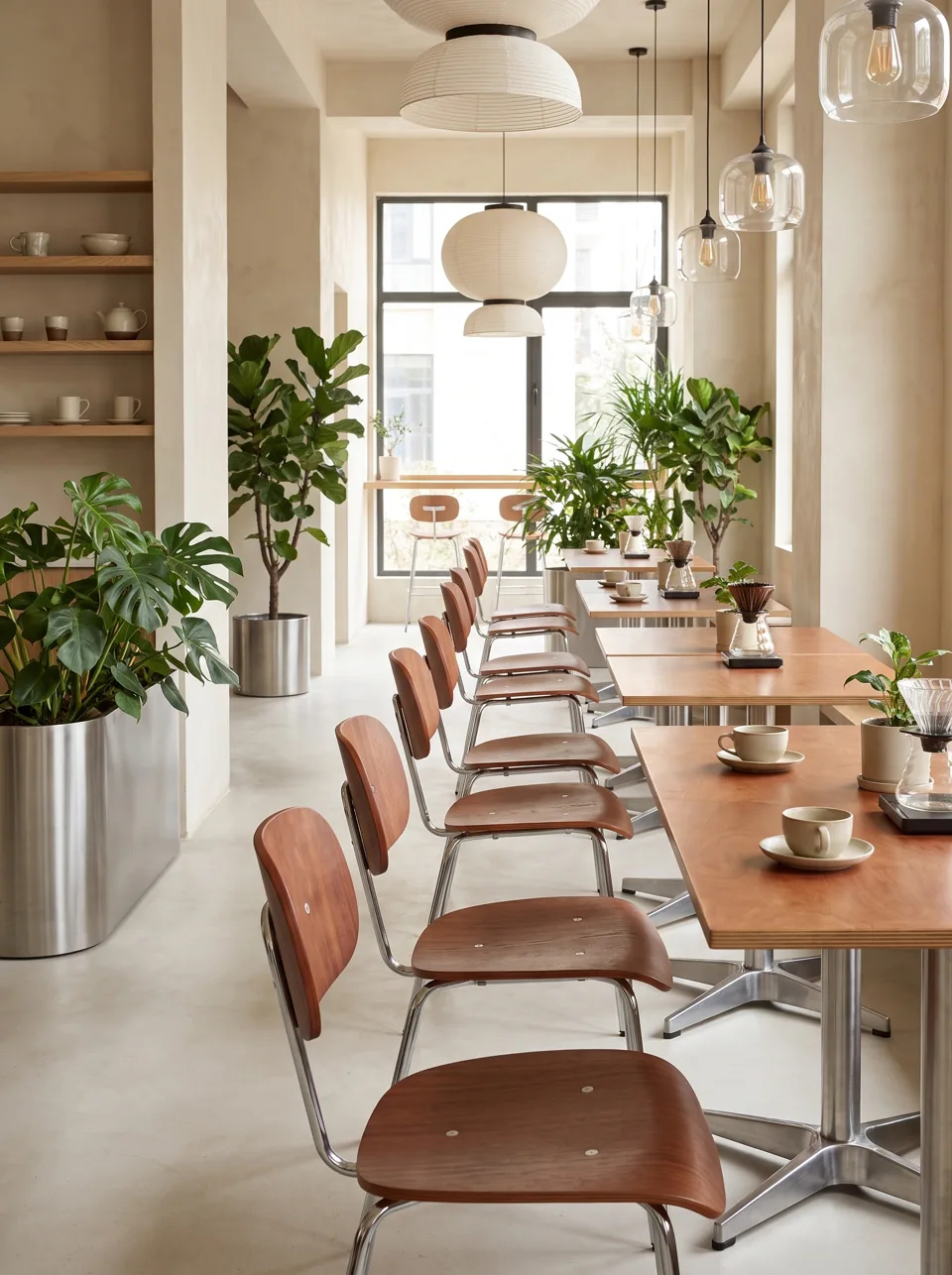
Chairs like the Plank Slab-Back Chair and the Ashby Bow-Back Windsor are built this way: hardwood frames, glued joints, corner blocks, commercial coatings. You can browse the full range in our wood dining chairs collection.
Steel restaurant chairs: what to look for
Steel makes the slimmest, strongest chairs, and the only practical stacking chairs. Its weak point is usually the finish, not the frame.
Tube size and wall thickness. Ask for both on the drawing. A chair can look identical in a photo with a thin-walled tube or a heavy one; only one will survive daily stacking.
Welds. Joints should be fully welded where they carry load, then ground smooth. Spot-tacked joints on load-bearing members are a warning sign.
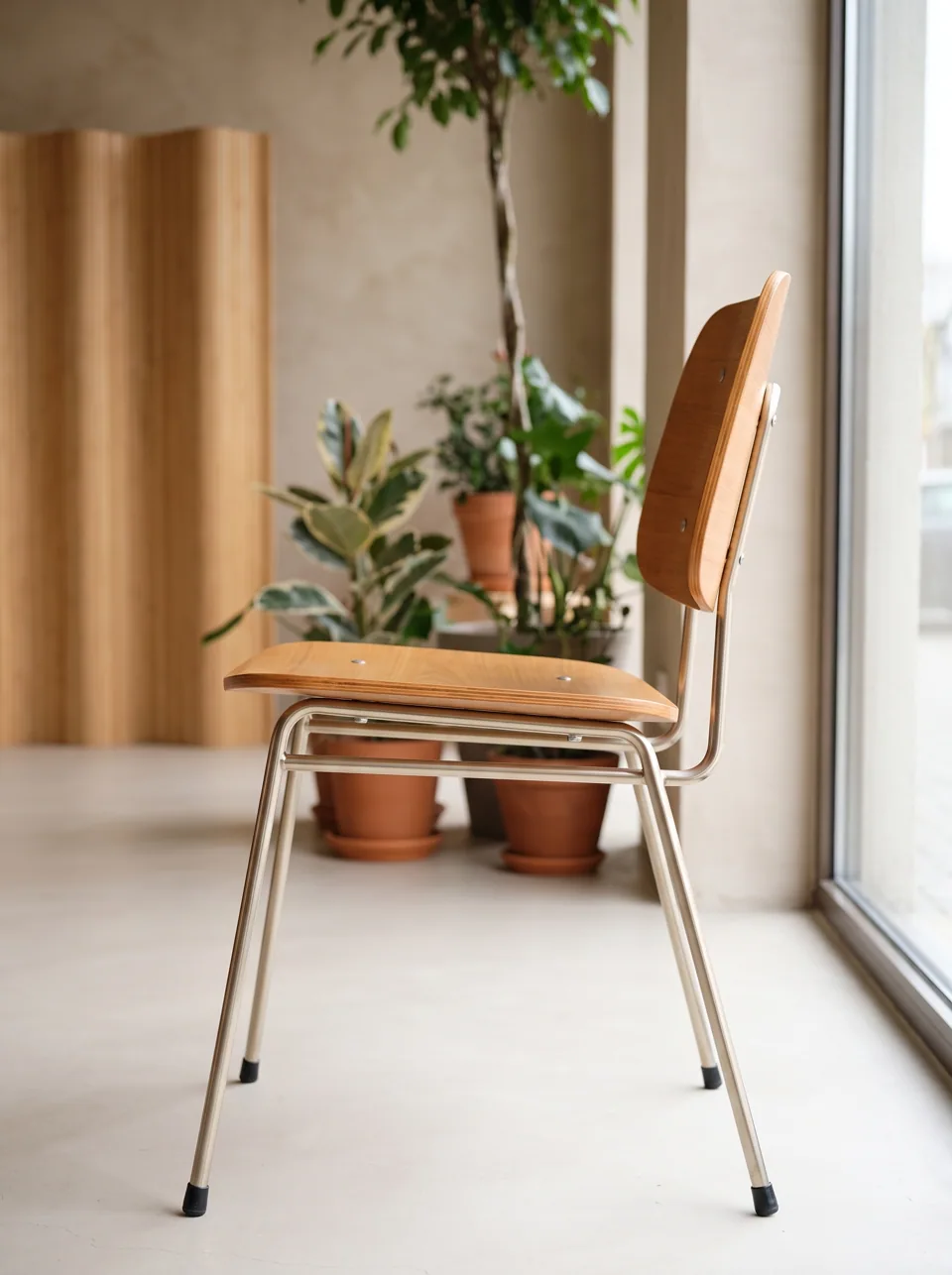
Pretreatment and powder coat. Before powder coating, steel should be cleaned and pretreated (for example phosphate or similar conversion coating) so the paint bonds and does not creep at chips. Powder coat gives a thick, durable finish in almost any color. Wood-grain transfer finishes add the look of oak or walnut over a powder-coated base.
Stacking. A stacking chair needs bumpers or spacers to keep chairs from scratching each other, and a stated maximum stack height. Our Crucible Stack Chair stacks eight high at about 12 lb (5.5 kg) per chair.
Floors. Steel legs need properly sized glides. Bare steel on tile chips the tile; steel on wood floors dents them.
Upholstered restaurant chairs: what to look for
An upholstered chair is a frame plus a cover system, and both have to be right.
Frame. Hardwood or steel, built to the same standards as above. The upholstery hides the joints, so ask to see them on the drawing.
Seat pan. The seat should be upholstered over a plywood or steel pan that unscrews from below. Then a torn or stained seat is a quick swap, not a new chair.
Foam. High-resilience (HR) polyurethane foam recovers better under repeated loads than conventional foam. Fire-retardant foam can be specified to the destination market's rules, for example builds intended to meet California TB 117-2013.
Cover. Contract vinyl is the most cleanable; woven contract fabrics are warmer and quieter; leather ages well but needs care. Abrasion rating, cleaning code and fire performance all matter. See our guide to commercial upholstery fabric specs for the numbers.
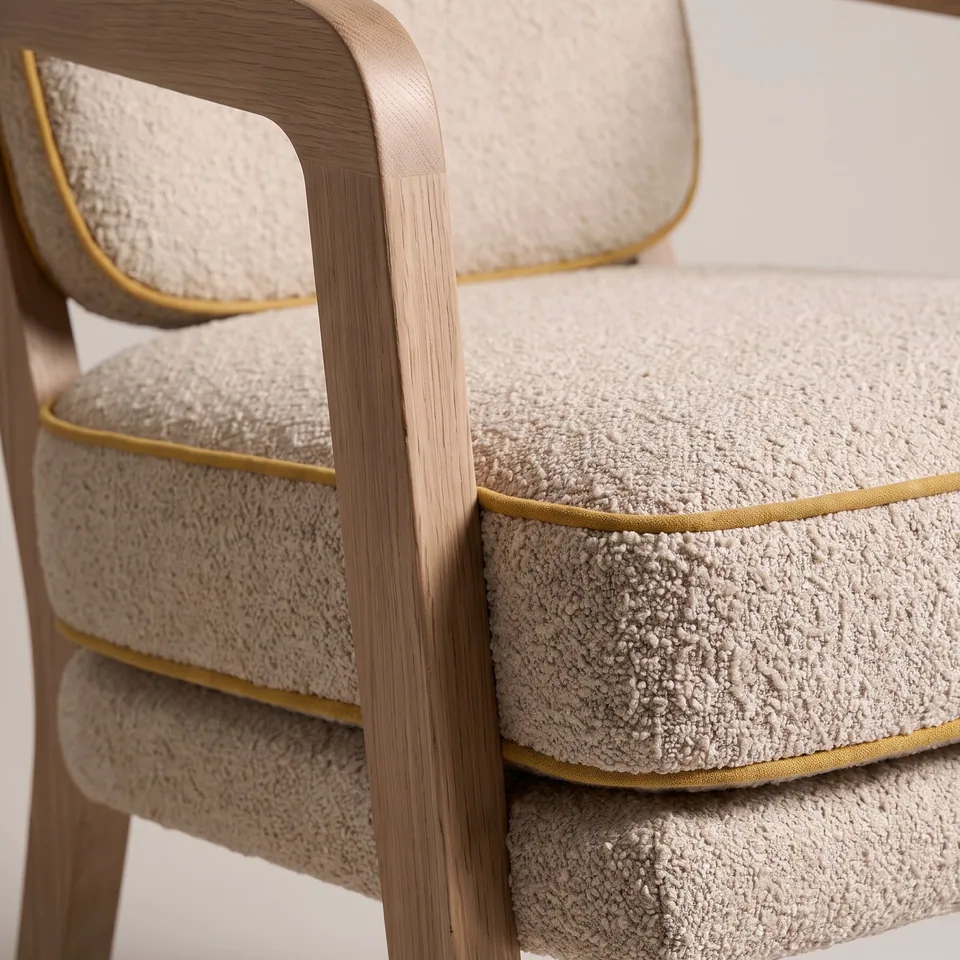
Two-material chairs. Many of the best restaurant chairs use different materials on different faces: soft fabric on the inside back, tougher vinyl on the outer back and edges that get bumped. The Quinn Two-Tone Armchair is built exactly that way.
Which material should I choose for my restaurant?
Start from how the room works, not from the photo.
- Average stay under 45 minutes, high turnover, frequent wipe-downs: steel or wood frames with vinyl seats, or unupholstered wood.
- Room cleared for events or private hire: steel stacking chairs, possibly in a wood-grain finish.
- Long dinners, higher average check: upholstered chairs, with contract fabric or vinyl selected for your cleaning routine.
- Mixed room with booths: upholstered side or low-arm chairs facing the booths; wood or steel chairs on loose tables.
- Bar and counter seating: steel or hardwood stools with footrings fixed into the legs.
Checklist: what to ask any chair supplier
- What species of wood, and how is it dried?
- How are seat rails joined? Are there corner blocks?
- What steel tube diameter and wall thickness? Fully welded?
- What pretreatment is used before powder coat?
- Is the seat removable from below?
- What foam, and can it be specified fire-retardant for my market?
- What abrasion rating is the cover?
- What glides, and are replacements available?
- What is the safe stack height (if any)?
- Can I see a pre-production sample in my finish and fabric?
Common mistakes
- Buying on photos. Two chairs that look identical can have completely different joints and tube walls.
- Choosing an oil or wax finish for a busy room. It looks lovely and marks the first week.
- Putting tufting or deep piping on seats. It traps crumbs and wears fast; keep it to backs.
- Using residential fabric. It may look identical and fail in months.
- Assuming any metal chair stacks. Only chairs designed to stack, with bumpers, should be stacked.
- Ignoring weight. Staff lift and move chairs all day; a 25 lb chair costs time and backs.
FAQ
Are metal chairs more durable than wood chairs?
Steel frames are stronger per pound and do not loosen at joints the way poorly made wood chairs can. A well-made hardwood chair with glued joints and corner blocks is also very durable, and easier to refinish. Finish quality decides how good either looks after years of use.
What is the best wood for restaurant chairs?
Dense hardwoods such as ash, oak and beech are the most common choices. Beech and ash bend well for curved designs; oak has a strong grain and takes stain well. Proper kiln-drying matters as much as species.
Are upholstered chairs practical in a busy restaurant?
Yes, if you choose contract-grade vinyl or high-abrasion fabric, keep tufting off the seat, and specify a seat that unscrews from below for recovering.
Can a wood-look chair be made in steel?
Yes. Wood-grain transfer finishes apply a printed grain over a powder-coated steel frame. They give the look of wood with steel's strength and stackability, as on our Grainline Stacking Chair.
Tell us your seat count, table sizes and the look you want. We reply with recommended models, seat heights and a quote, usually with draft drawings attached.
Request a quote